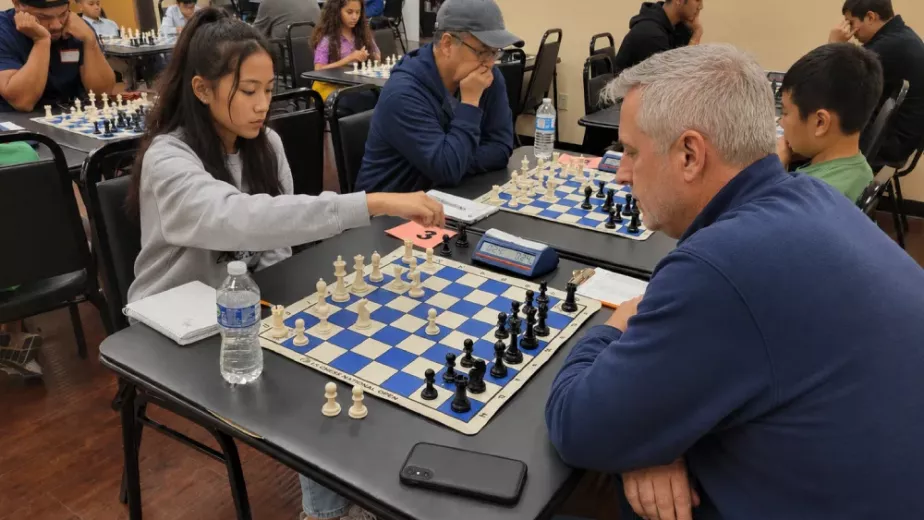
If your child just learned how to play chess and you’re wondering whether they’re ready to compete, you’re not alone. Every month, Las Vegas parents search for scholastic chess tournaments in Las Vegas without knowing where to start – what “scholastic” even means, whether their child needs to be good first, or what actually happens once they get there. This guide walks through all of it: how local sections work, what registration involves, and what a real tournament day looks like for a family showing up for the first time.
What Is a Scholastic Chess Tournament?
“Scholastic” simply means the tournament is built for students. Instead of one big pool of players competing against anyone in the room, scholastic events break players into sections by grade, age, or rating, so a second grader isn’t sitting across from a high schooler with years of tournament experience.
Open tournaments work differently. Anyone can enter, adults included, and sections are usually split by rating alone. A scholastic event, by contrast, is either limited to students only or built around dedicated kids’ sections that run alongside an adult event at the same venue. That distinction matters for a first-timer, because it changes who else will be at the tables and how competitive the room feels.
Most scholastic tournaments are also shorter and faster than adult classical events. Games typically run 25 to 30 minutes per player instead of an hour or more, which keeps a full day of chess manageable for an eight-year-old’s attention span.
Scholastic Chess Tournaments and Sections in Las Vegas
Southern Nevada has an active youth chess scene, and it runs through a handful of recognizable organizers rather than one central calendar. The Southern Nevada Chess Club, working with the Silver State Chess Association, is the group most closely tied to formal scholastic play in the valley. They host the Southern Nevada State Scholastic Championship, a US Chess rated event that has run in sections like K-3, K-5, Middle School (grades 6-8), and High School (grades 9-12), plus lower-rated “Challengers” or “Reserve” sections for kids who are brand new or unrated. Sections like this exist so a first-year player with no rating isn’t matched against a kid who has been competing for three years – the games stay close enough to be fun instead of lopsided.
The club also runs a Southern Nevada Girls Scholastic Championship and, on a regular basis, single-day scholastic tournaments where adults are not permitted to play, keeping the field strictly kids-only. Time controls at these events tend to sit around 25 minutes per player with a small increment per move. Worth noting: the club has been between physical locations since losing its longtime Spring Mountain Road venue at the end of 2025, so always check snvchess.com for the current site before you make plans to attend.
A second option worth knowing about is Great Knights Chess, which runs its own US Chess affiliated tournaments with both rated and unrated sections in the same event – a practical setup for a family that isn’t sure yet whether their child should compete for a rating or just get comfortable with tournament pacing first.
If your child is still very new to the game, the Las Vegas-Clark County Library District is a low-pressure place to start. Several branches, including Rainbow Library and Enterprise Library, have run free, casual chess tournaments for elementary-age kids using short Swiss-format rounds. These aren’t US Chess rated and don’t carry the same stakes as a championship event, which makes them a comfortable first taste of tournament structure – pairings, rounds, and a scoresheet – without the pressure of a rated result.
You can browse our youth and scholastic tournaments in Las Vegas listings to see what’s coming up locally before committing to a specific event.
Knight School Tournaments
The Knight School operates an after-school chess program in the Las Vegas area with its own internal tournament tradition, often referred to as “TournaParties,” along with a citywide tournament held at the end of each semester for enrolled students. These are built around The Knight School’s own class structure rather than the open, US Chess rated scholastic circuit described above, so they tend to feel more like a class celebration than a formal competition.
Because enrollment, format, and how these events tie into the wider Knight School network can change from one semester to the next, verify the current schedule and section structure directly with The Knight School before assuming a specific tournament date or format. If your family is already enrolled in one of their classes, your instructor is the fastest way to get accurate, current details.
How to Register Your Child for a Tournament
Registration for most rated scholastic tournaments in Las Vegas follows a similar pattern:
- Create or renew a US Chess (USCF) membership for your child if the tournament is rated. This is typically done directly through uschess.org before you register for the event itself.
- Register online through the organizer’s own registration page, which usually asks for your child’s name, grade, USCF ID (if they have one), school, and a parent or guardian contact.
- Pay the entry fee, which is often tiered – a lower price for registering early, rising as the tournament date approaches.
- Confirm the section your child qualifies for based on grade, age, or current rating, since misreading a cutoff can land a child in the wrong bracket.
A first-time family typically needs:
| Item | Notes |
| US Chess membership | Required for rated events; not needed for casual library tournaments |
| Entry fee | Varies by organizer and by how early you register |
| Player’s grade or birthdate | Used to confirm section eligibility |
| A chess set and clock | Some organizers supply house sets; others ask players to bring their own – verify with the specific event |
| Comfortable clothes and a snack | Tournament days run long, especially with multiple rounds |
No, your child does not need a USCF rating before their first event. Nearly every organizer running scholastic sections in Las Vegas has an unrated or “reserve” bracket built specifically for first-timers, and a first tournament simply gives a child a provisional rating to build on.
What to Expect on Tournament Day
Check-in usually opens roughly 30 to 45 minutes before the first round, where a tournament director confirms your child’s section and hands them their starting information. From there, most scholastic events in Las Vegas use Swiss-style pairings, meaning your child plays a new opponent each round based on how the tournament is going, rather than being eliminated after a single loss.
Time controls in scholastic play are usually explained as “25 minutes plus 5 seconds” or similar – each player gets 25 minutes on their own clock for the whole game, with a small amount of extra time added after each move. It sounds technical, but the tournament director walks new players through the clock before Round 1, and most organizers running true beginner sections don’t expect flawless notation from a first-timer.
Whether parents are expected to stay on-site or can drop off during play is not the same at every venue. Some scholastic tournaments post a specific policy; others simply expect a parent or guardian to remain reachable nearby. Don’t assume either way – check the specific tournament’s rules or ask the organizer directly when you register, and follow whatever check-in and supervision process that venue has in place.
Between rounds, there’s often a lunch break, and many scholastic organizers in Las Vegas provide something simple like pizza for participants. Trophies or small prizes are common at the end of the day, especially for the top finishers in each section, though not every tournament runs a prize table – check the individual event listing.
Preparing Your Child for Their First Tournament
A few practical things make a real difference on tournament day:
- Play a few practice games at a real time control. Most kids have only played untimed games at home. A 25-minute clock feels completely different the first time.
- Introduce basic notation if the section requires it. Rated sections often expect players to record their moves; casual library events usually don’t.
- Talk through what a loss actually means. In a multi-round event, a first-round loss isn’t the end of the day – your child still plays every remaining round.
- Pack for a long day. Bring water, a snack, and something quiet to do during breaks between rounds.
- Arrive early. Check-in lines move slowly when everyone shows up at once, and pairings for Round 1 are usually posted shortly after check-in closes.
Managing expectations matters more than strategy at this stage. A first tournament is mostly about learning the rhythm of competitive play – the clock, the silence at the board, the handshake after the game – not about winning trophies.
How to Confirm Tournament Details Before You Register
Because dates, sections, fees, and venues can shift between seasons, always confirm the specifics directly with the organizer before you register:
- Check the tournament’s official registration page for the current date, section breakdown, and entry fee.
- Look up the event on US Chess’s own tournament listings (new.uschess.org) to confirm it’s an active, sanctioned event and see the posted section rules.
- If anything is unclear – especially whether a section fits your child’s grade or rating, or whether you’re expected to stay on-site – email or call the organizer directly rather than guessing.
This extra step takes a few minutes and prevents the more common mistakes: showing up to the wrong section, missing a membership requirement, or misjudging how long the day will run.
Find More Youth and Scholastic Events in Las Vegas
Las Vegas has more going on for young players than a single tournament listing can capture – school-affiliated clubs, library programs, and independent scholastic organizers all run on their own schedules throughout the year. Our Knight School chess tournaments and broader event listings are a good place to see what’s active locally, and if you’d like to hear about new scholastic events as they’re announced, you can sign up here to get notified.
Frequently Asked Questions
Does my child need to already know how to play well to enter a scholastic tournament?
No. Most Las Vegas scholastic events run unrated or entry-level sections specifically for beginners, and knowing the basic rules is usually enough to start.
How much does it typically cost to enter?
Entry fees vary by organizer and often increase closer to the tournament date. Casual library tournaments are frequently free; rated club or championship events usually charge a fee that can run from roughly $20 to $75 depending on the event and how early you register.
Do I need to buy a chess set for tournament day?
It depends on the organizer. Some supply house sets and clocks; others ask families to bring their own. Confirm this on the specific tournament’s registration page.
Can my child play up a grade if they’re strong for their age?
Some organizers allow this on request; others hold firm section cutoffs. Ask the tournament director directly rather than assuming.
Is a US Chess membership required for every tournament?
Only for rated events. Casual, non-rated tournaments – like several run through the Clark County Library District – typically don’t require one.
How long does a scholastic tournament day usually run?
Most single-day scholastic events run four to six rounds and take up most of a Saturday, often from mid-morning into the early evening once you include a lunch break.
What if my child loses their first game?
That’s normal, and it doesn’t end their day. Multi-round Swiss tournaments mean every player keeps playing new opponents through the final round, regardless of an early loss.
Final Thoughts
A first scholastic chess tournament in Las Vegas doesn’t need to be intimidating once you know what’s actually involved – how sections are built, what to bring, and where to double-check the details that change from event to event. Between the rated circuit run through the Southern Nevada Chess Club and Silver State Chess Association, club-based options like Great Knights Chess, and casual entry points through the Clark County Library District, there’s a reasonable starting place for a wide range of kids, from complete beginners to players ready to build a rating. Confirm the specifics with the organizer, prepare your child for the pacing of a timed game, and the rest tends to take care of itself.